
Orthodontics for Children
in Bay Ridge
Every child’s smile develops on its own schedule, and the right timing makes all the difference. From a gentle first check-up at age 7 to braces and clear aligners that fit busy teen lives, Dr. Costalos guides your child’s smile with patience, honesty, and board-certified expertise. Parents get clear answers and a plan that makes sense, and kids get a friendly team that makes every visit easy.

Early Orthodontics
for Children, Ages 7 to 10
Each child’s needs are unique. For some, it is best to begin treatment before all of the permanent teeth have come in. For others, it makes more sense to wait until they are fully in. The American Association of Orthodontists recommends that children have an initial orthodontic evaluation by age 7, because it is the optimal time to evaluate the development of the jaws and permanent teeth. Severe malocclusions can be treated or modified at this time, as needed.
We diagnose a child’s natural growth pattern and plan to guide that growth to create the best possible foundation. Acting at the right time can improve the stability, function, and appearance of the results while helping prevent problems down the road. A proper evaluation lets us create a seamless plan with periodic monitoring.
Signs your child should see an orthodontist:
- Early or late loss of baby teeth
- Difficulty chewing or biting
- Mouth breathing or snoring
- Thumb or finger sucking after age 5
- Crowded, misplaced, or blocked-out teeth
- Jaws that shift, click, or sit too far forward or back
- Front teeth that don’t meet, or top teeth that cover the bottom teeth completely
What is two-phase treatment?
Phase one (often around ages 7–10) addresses the jaw and bite while your child is growing, using appliances such as expanders or partial braces. A resting period follows while the remaining permanent teeth come in.
Phase two, if needed, uses braces or aligners to fine-tune tooth positions. Many children need only monitoring, and we’ll tell you honestly if waiting is the better choice.
What to expect at the first visit.
A quick, gentle exam, no needles or discomfort, and a clear answer: treat now, monitor, or no treatment needed.


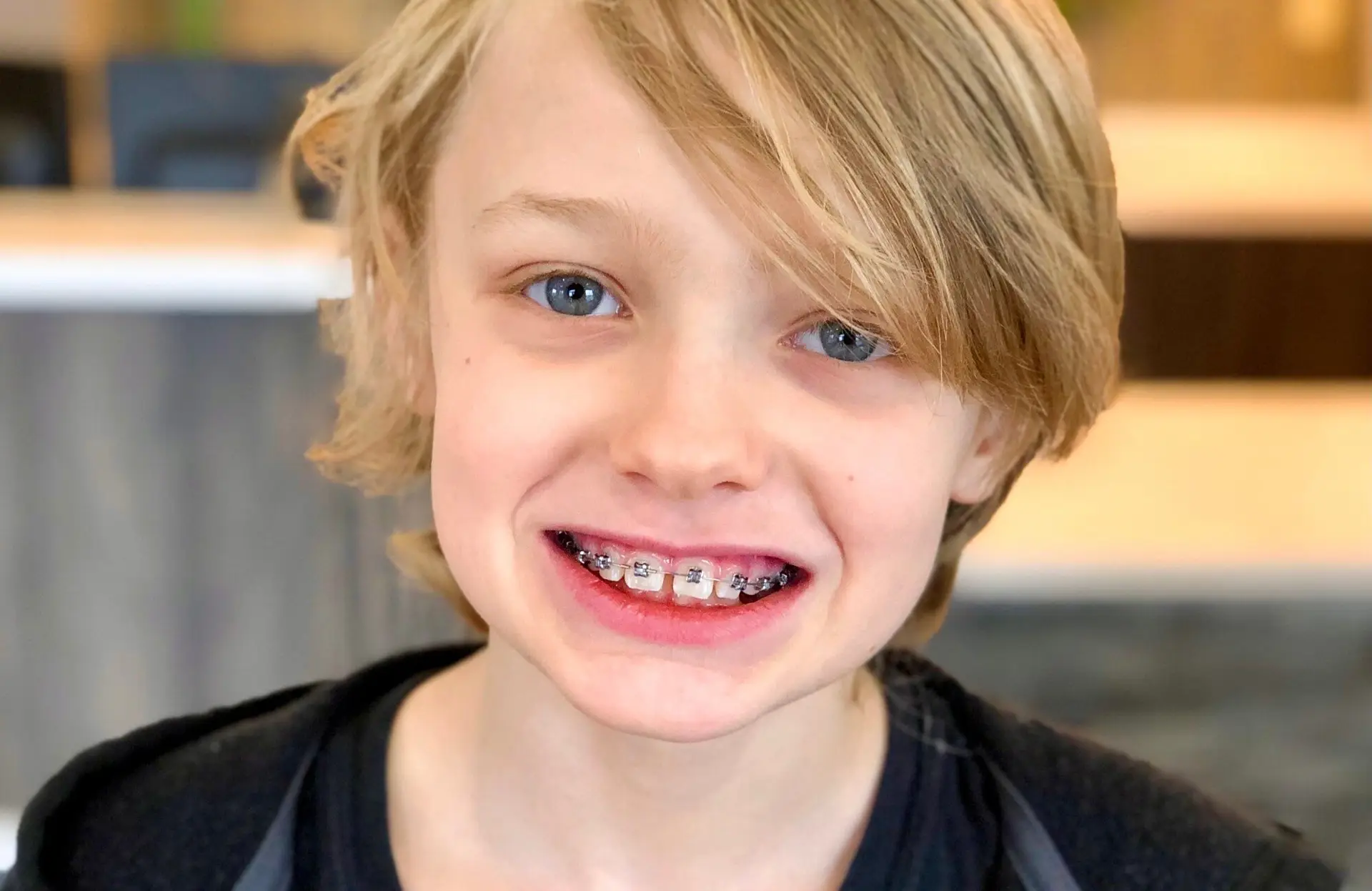
Braces and Aligners for Teens
The teen years are the most common time for orthodontic treatment, since most permanent teeth are in and the jaws are still growing. We make treatment fit into busy teenage lives: school, sports, music, and everything in between.
Why are the teen years a great time for treatment?
By the early teen years, most baby teeth are gone and the jaws are still growing. That combination lets us move teeth efficiently and guide the bite while growth is on our side, which often means shorter treatment and longer-lasting results. Every teen develops differently, so Dr. Costalos recommends the right time to start based on your teen’s growth, not just their age.

Treatment Options for Teens
Metal Braces
Small, modern stainless-steel brackets made in California, with fun colored bands your teen can switch up at every visit
Any type of case, including complex bites, and teens who want low-maintenance treatment
Clear Braces
Ceramic translucent brackets made in Switzerland that blend in with the teeth
Teens who want a more subtle look
Clear Aligners
Removable, nearly invisible trays, switched every 1 to 2 weeks
Responsible teens with mild to moderate cases who will wear them 20 to 22 hours a day
Not sure which option is best? We’ll walk through the pros and cons with you and your teen and give an honest recommendation. The best choice is the one that fits your teen’s smile, schedule, and personality.
Life with Braces
School, sports, and music: Braces won’t stop your teen from playing sports, playing an instrument, or singing. Playing an instrument or a contact sport may take a short adjustment period, and we recommend a mouthguard for contact sports. Have a big event coming up, like school photos, a dance, or graduation? Let us know ahead of time, and we’ll do our best to plan around it. For snack ideas between classes, see Eating with Braces on our Patient Care page.
Making it easy for busy families: Visits happen about every 4 to 6 weeks and are quick and efficient, so your teen spends less time in the chair and more time doing what they love. We offer appointment times that work around school schedules, and we keep parents updated on progress at every visit.
For parents: We know you’re investing in your teen’s health and confidence. Before treatment begins, we’ll explain the plan, timeline, and costs clearly, and we’ll partner with your teen to build great habits. If brushing or aligner wear needs a little extra attention, we’ll let you both know right away so treatment stays on track. Flexible payment plans are available; see Insurance & Financing on our New Patients page.
After braces: Once treatment is complete, your teen will wear retainers to keep their new smile in place. We’ll show them exactly how, and our Patient Care page covers retainer care.
Tips for a Successful Smile
- Keep it clean. Brush after meals and carry a travel toothbrush in your backpack. Clean teeth during treatment mean a brighter smile when braces come off.
- Follow the plan. Wear rubber bands or aligners exactly as directed. Consistent wear keeps treatment on schedule.
- Protect your braces. Skip hard and sticky foods like nuts, hard candy, and gum. Broken brackets can add time to treatment.
- Speak up. If something breaks or pokes, call us. Our Patient Care page also has quick fixes for common issues.
Questions Parents and Teens Ask Most
When should my child first see an orthodontist?
The American Association of Orthodontists recommends a first orthodontic check-up by age 7. Most children don’t need treatment that early, but an evaluation lets us spot developing problems and plan the best timing. If everything looks good, we’ll simply keep an eye on your child’s growth.
Why age 7?
By around age 7, the first permanent molars and front teeth have usually come in, and the jaws are still growing. That makes it the ideal time to spot issues like crossbites, crowding, or jaw imbalances while they’re easier to guide.
Do we need a referral from our dentist?
No referral is needed. You’re welcome to call us directly, and we’ll keep your family dentist updated throughout treatment.
What is two-phase treatment?
Phase one uses appliances like expanders or partial braces to correct jaw and bite problems while your child is still growing. After a resting period while the remaining permanent teeth come in, phase two, if needed, uses braces or aligners to fine-tune the smile.
Will my child need braces again after early treatment?
Sometimes, yes. Many children who have early treatment still need a second phase, but it’s often shorter and simpler because the foundation has already been set.
What is a palatal expander?
A palatal expander is a custom appliance that gently widens the upper jaw while it’s still growing. It can correct crossbites and create room for crowded teeth. Kids usually feel some pressure for a few days, not pain, and adjust quickly.
How long will my teen wear braces?
Most teens wear braces for about 12 to 24 months. Treatment time depends on how much correction is needed and how well your teen follows instructions, like wearing rubber bands and keeping appointments.
Do braces hurt?
Getting braces put on doesn’t hurt. Teeth may feel sore for a few days after placement and after adjustments. A warm salt-water rinse, soft foods, orthodontic wax, and an over-the-counter pain reliever (following the label directions) usually help.
Can my teen get clear aligners instead of braces?
Many teens can. Aligners work well for mild to moderate cases, but they need to be worn 20 to 22 hours a day to work. Dr. Costalos will let you know honestly whether aligners or braces are the better fit.
How often are appointments?
Visits are usually every 4 to 6 weeks. They’re quick, and we offer times that work around school schedules.
How much does treatment cost?
Cost depends on the type and length of treatment. We’ll review your exact fee at your treatment review, with no surprises, and help you use insurance benefits and flexible payment plans.
What should we do if a bracket breaks or a wire pokes?
Don’t worry; most issues aren’t emergencies. Cover the spot with orthodontic wax and give us a call so we can schedule a quick repair. Our Patient Care page has step-by-step tips.
Have More Questions?
Explore Related Treatments



Ready to Get Started?
Book a consultation for your child or teen. We’ll answer every question and show you what their new smile can look like.